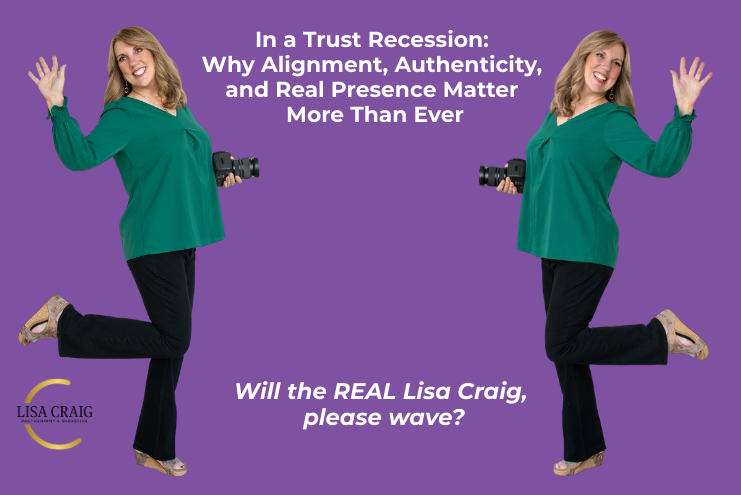
By Lisa Craig
We are living in what many would call a trust recession. Audiences are more skeptical, more selective, and more cautious about who they believe and who they buy from. At the same time, technology has made it easier than ever to present a flawless version of ourselves online.
The question is no longer whether images look good.
The question is whether they feel true.
When what people see online does not align with who they meet in real life, trust erodes. In business, branding, and photography, alignment has become the new currency.
When Creativity Becomes Instant
We live in a time when creativity can be generated instantly. Images that once required vision, skill, and intentional effort can now be produced in seconds. On the surface, this feels exciting and empowering. Technology has expanded what is possible.
When Perfection Becomes Noise
Over time, something quieter begins to happen. When perfection becomes constant, it loses its impact. When every image is flawless, optimized, and curated, our emotional response dulls. The scroll continues, yet fewer images truly stop us. What once sparked curiosity or connection starts to blend into visual noise.
Perfection may impress the eye, but alignment is what builds trust.
What Photography Has Always Been About
This shift matters deeply in photography, especially in headshots and personal branding. Photography was never just about how someone looked. It was about presence, trust, and the subtle humanity that lives in a real moment. A genuine expression. A thoughtful pause. The energy someone carries into a room.
These details create a connection before a conversation ever begins.
The Real-World Cost of Artificial Images
AI-generated images and avatars can be impressive. They are efficient, consistent, and visually striking. They also introduce a question we are not asking often enough.
How do people reconcile an AI-generated image with a real person when they finally meet them in real life?
Online visuals shape expectations long before an introduction happens. When an image presents a version of someone that does not exist in reality, a disconnect forms. That disconnect shows up quickly. A subtle recalibration. A quiet sense that something does not fully align.
If who you appear to be online does not match who you are in real life, connection breaks before it begins.
Trust Is Built Through Consistency
Trust depends on alignment. When what someone sees online does not match who they meet in person, credibility weakens. In business, this matters deeply. People are not only buying services. They are buying confidence, clarity, and reliability.
A real photograph allows someone to be recognized, not just seen. It communicates consistency without words. This is who I am. This is who you will meet.
When Identity Becomes Unclear
When brands chase perfection at the expense of truth, identity blurs. Messaging becomes polished yet hollow. Visuals become beautiful yet disconnected. Over time, people struggle to understand who you are, what you stand for, and why they should trust you.
Confused buyers do not buy. Period. End of story.
Using Technology With Intention
This is not an argument against technology. AI is a powerful tool when used intentionally. The challenge lies in what it replaces and what it removes. Creativity loses meaning when it exists solely to impress algorithms rather than connecting with people.
The Future Belongs to What Is Real
The future of photography and branding does not belong to perfection. It belongs to honesty, emotional relevance, and alignment between who you are online and who you are IRL (in real life).
Real connection cannot be generated. It must be felt.
The images that matter most are not the ones that look perfect. They are the ones that reflect truth, presence, and humanity.
Those are the images that endure. Those are the images that build trust.
In a trust recession, alignment is not optional. If your brand visuals need to reflect who you are today and build trust before you ever walk into the room, let’s talk. Schedule a call to explore how intentional photography can support your credibility and growth.
